
Industry Work
Applied Research & Real-World Implementation
This section highlights applied industry work, including collaborations with organizations, data-driven consulting, and real-world implementation of research and analytical methods.
AI Systems Developer
Independent Project / Industry Collaboration
DevCraft – AI Systems Developer (Explainable AI)
OVERVIEW
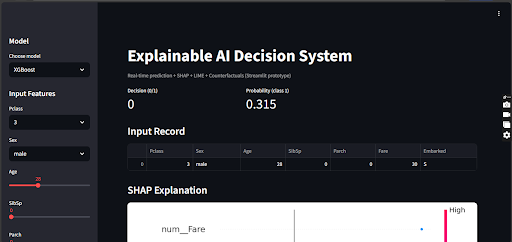
Designed and developed an Explainable AI decision system to address the lack of transparency in high-stakes AI applications. The system transforms black-box model outputs into interpretable, auditable insights suitable for regulated environments.
Key Contributions
Built machine learning models using Random Forest and XGBoost for decision analysis
Integrated explainability frameworks including SHAP, LIME, and counterfactual analysis
Developed an interactive Streamlit dashboard for real-time decision exploration
Implemented structured input tracking and downloadable audit artefacts for compliance
Designed end-to-end system architecture as a deployable AI solution
Innovation
Combined predictive modelling, explainability, and counterfactual simulation into a single integrated platform—enabling transparent and accountable AI decision-making.
Impact
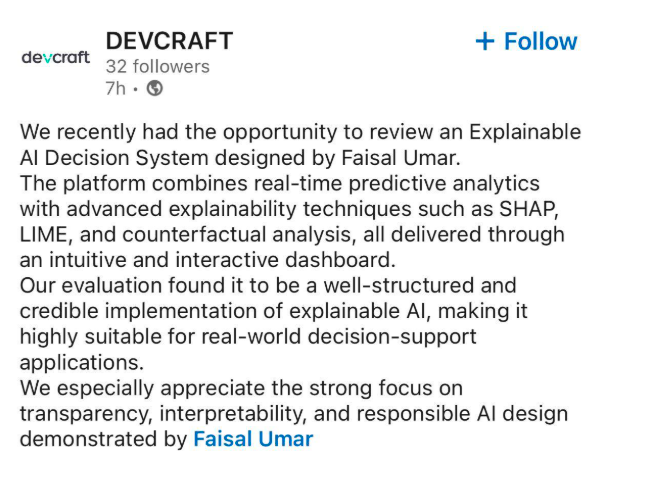
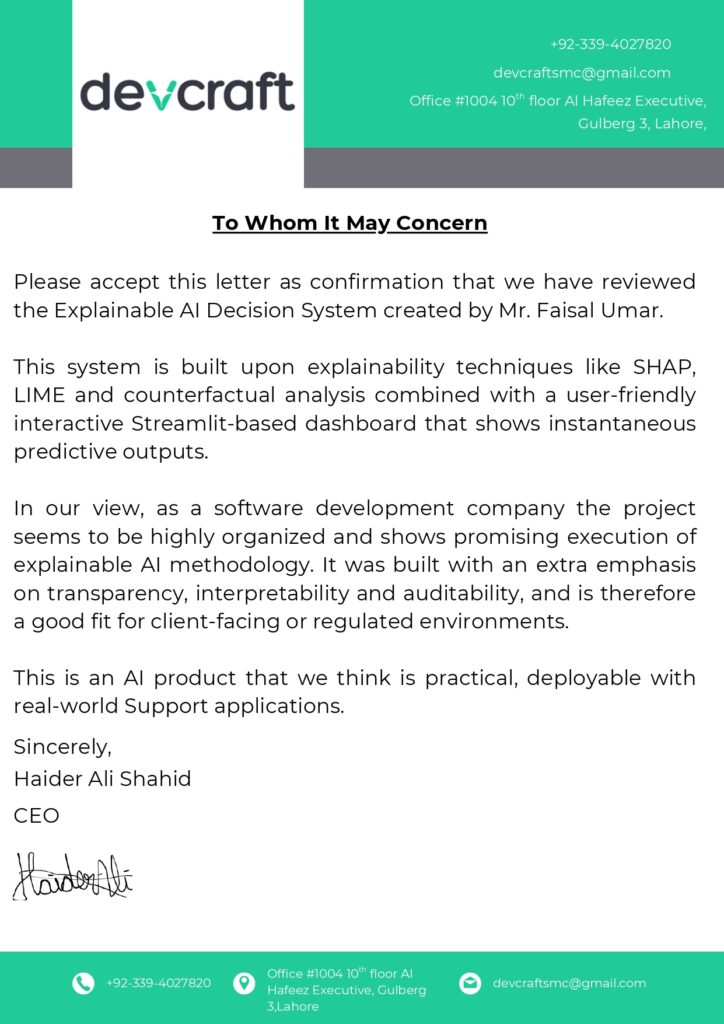
Converted opaque AI outputs into human-interpretable insights, supporting risk assessment, auditability, and governance in regulated environments. The system was reviewed and validated by DevCraft as a credible, deployable AI product concept.
AI Developer
Industry Implementation
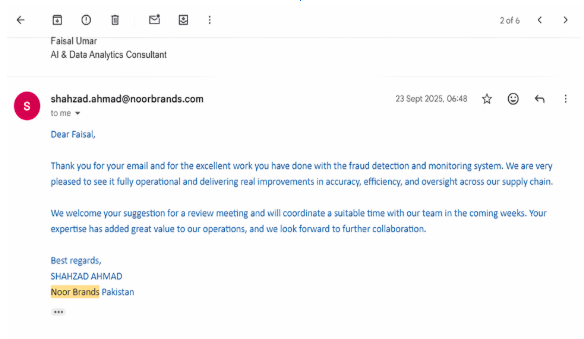
Noor Brands – AI Developer (Fraud Detection & Monitoring System)
OVERVIEW
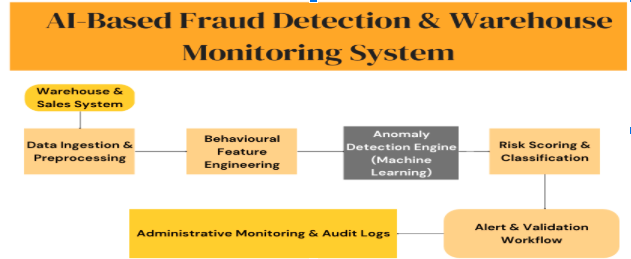
Designed and deployed an AI-driven fraud detection and warehouse monitoring system to enhance inventory control and operational oversight.
Key Contributions
Developed anomaly detection models to identify suspicious stock movements
Engineered behavioural indicators to detect operational irregularities
Built a real-time monitoring system supporting daily warehouse operations
Designed system workflows to function effectively with incomplete operational data
Deployed and integrated the system into live business processes
Innovation
Introduced AI-based anomaly detection beyond traditional rule-based controls, enabling intelligent identification of hidden operational risks.
Impact
AI Systems Developer
Industry Implementation
Union Stores Limited - AI Enabled Audit Intelligence and Real-Time Anomaly Detection System
OVERVIEW
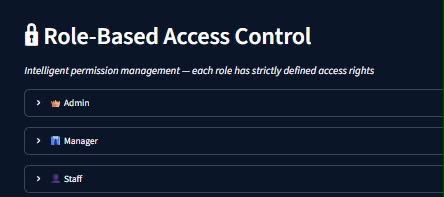
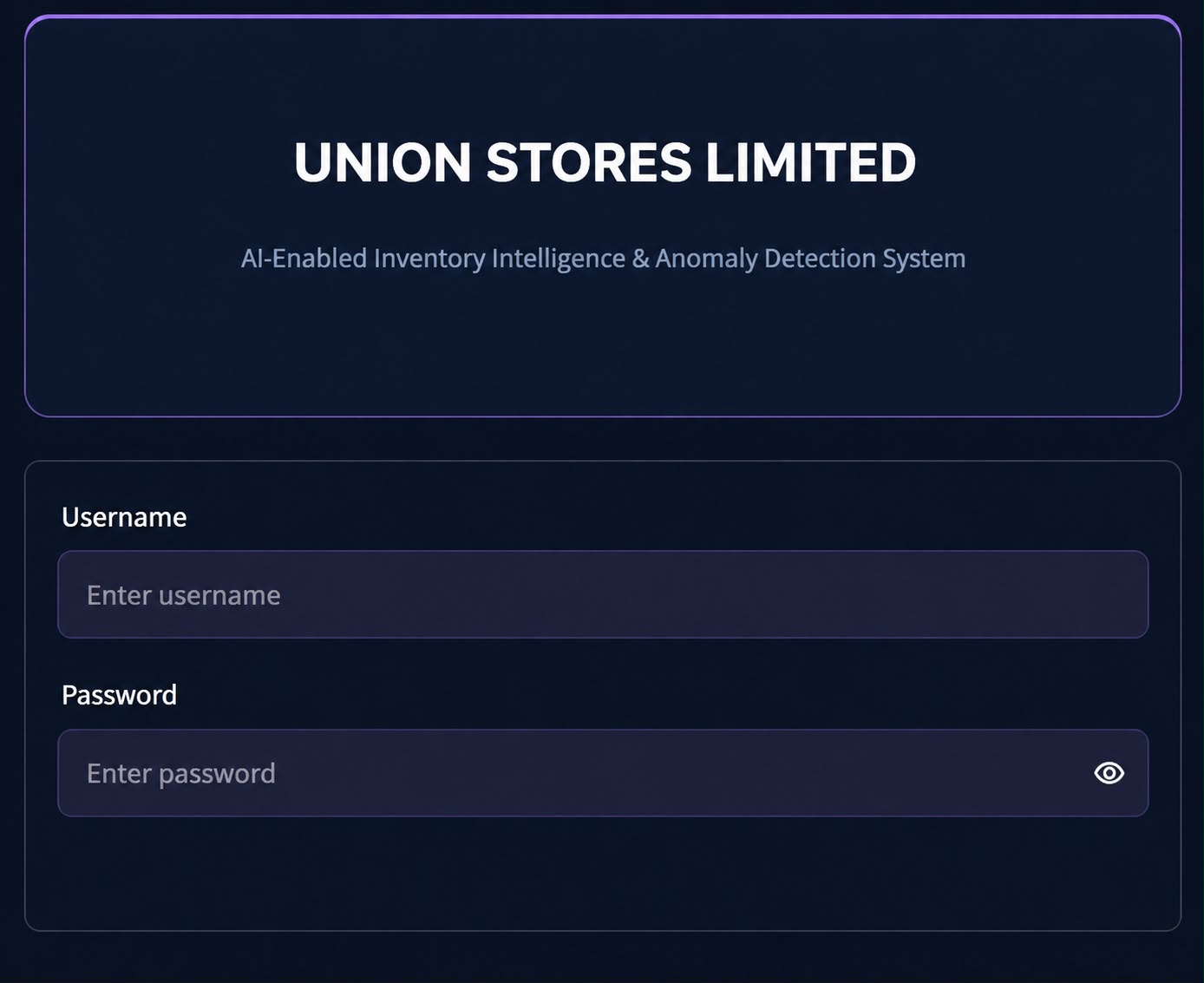
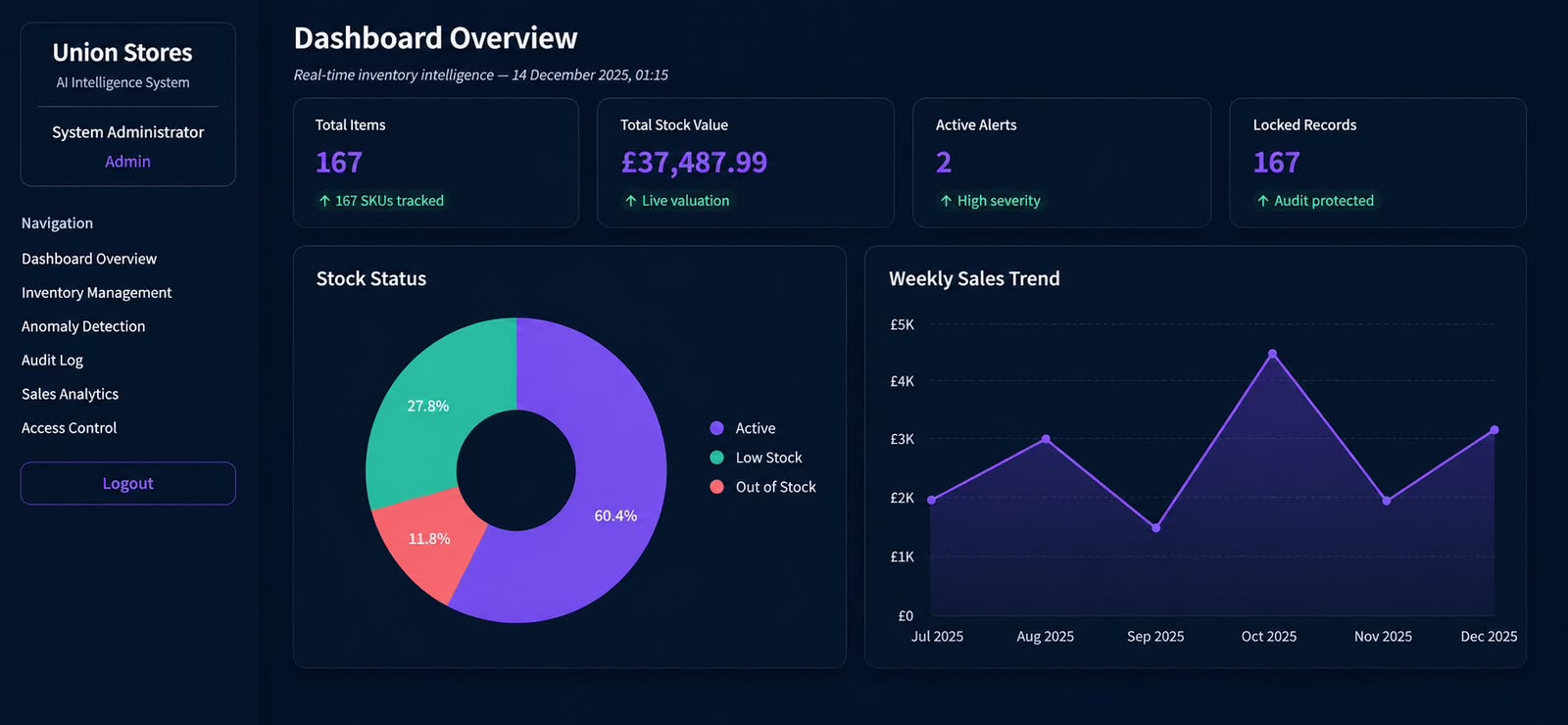
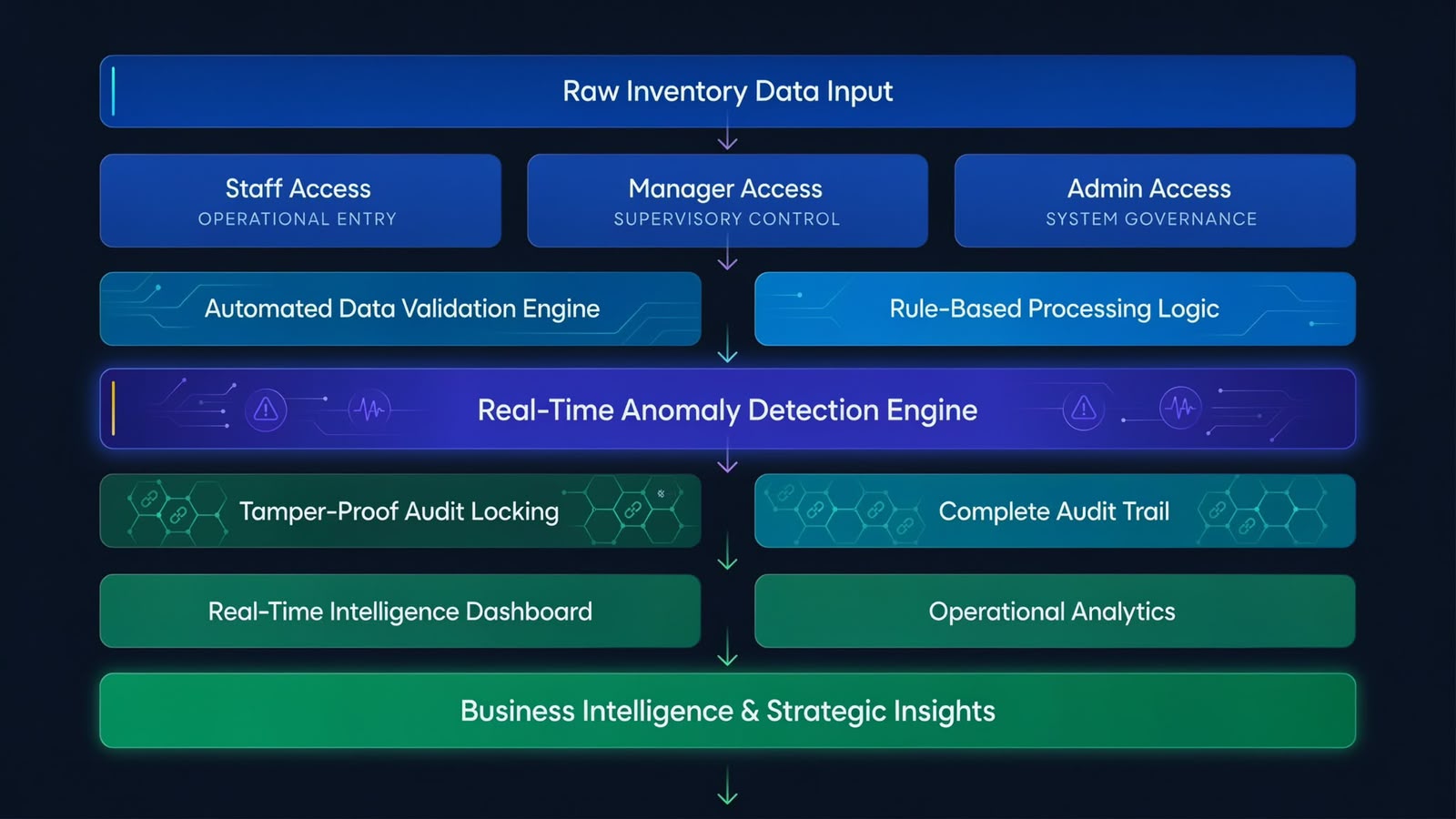
Independently designed, developed, and deployed an AI-enabled inventory intelligence and anomaly detection system for Union Stores Limited, integrating rule-based anomaly detection, automated validation logic, role-based access controls, tamper-proof audit mechanisms, and real-time behavioural monitoring to replace fragmented manual processes with a structured, secure, and auditable digital framework.
Key Contributions
Independently designed and implemented the system architecture, security controls, automation logic, and controlled inventory workflows.
Developed intelligent role-based access architecture to control data access and operational permissions.
Implemented automated data validation and rule-based anomaly detection to identify suspicious edits, unauthorised deletions, and irregular inventory movements.
Developed irreversible audit locking and controlled inventory transitions to prevent unauthorised modification of historical records.
Built real-time behavioural monitoring to identify suspicious changes and support continuous operational oversight.
Automated inventory reporting and monitoring, reducing reliance on time-consuming manual reporting processes.
Integrated the system into the organisation’s daily inventory operations, with its implementation and operational effects confirmed by the responsible authority.
Innovation
Replaced fragmented, manually editable inventory processes with a secure and automated operational intelligence framework. Unlike conventional spreadsheet-based automation, the system applies structured decision logic, automated validation, behavioural monitoring, and controlled workflows to actively protect data integrity and accountability rather than functioning solely as a passive record-keeping system.
Impact
- ✓
Reduced inventory discrepancies by 65%. - ✓
Eliminated unauthorised record changes through controlled access and tamper-proof audit mechanisms. - ✓
Reduced inventory reporting time from approximately one full working day to around 10 minutes. - ✓
Saved approximately 25 hours of manual work per week through automation. - ✓
Improved inventory accuracy, transparency, traceability, and operational governance. - ✓
Successfully incorporated into daily inventory operations and adopted as the organisation’s core inventory management system. - ✓
Demonstrated that advanced inventory intelligence and governance controls could be implemented without reliance on an expensive conventional ERP platform.
Automation Developer
Industry Implementation
Bundu Khan – AI-Assisted Operational Intelligence and Reporting System
OVERVIEW
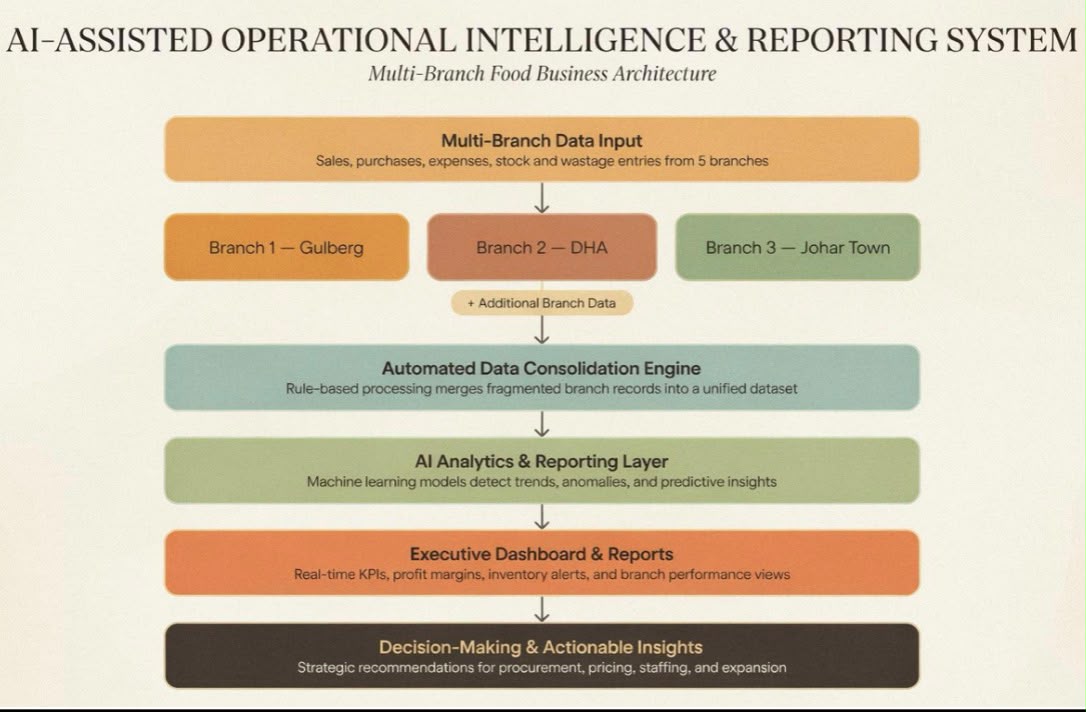
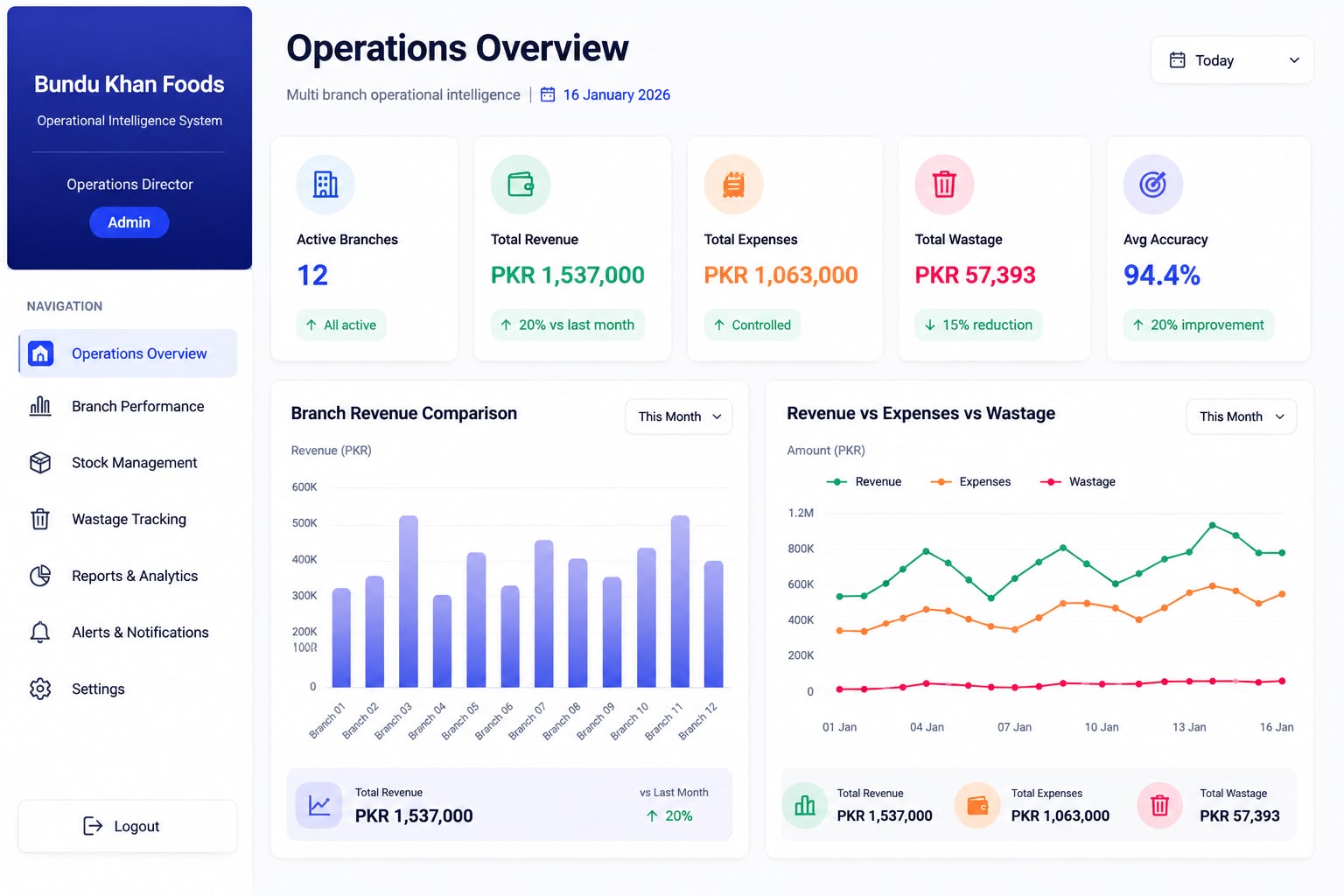
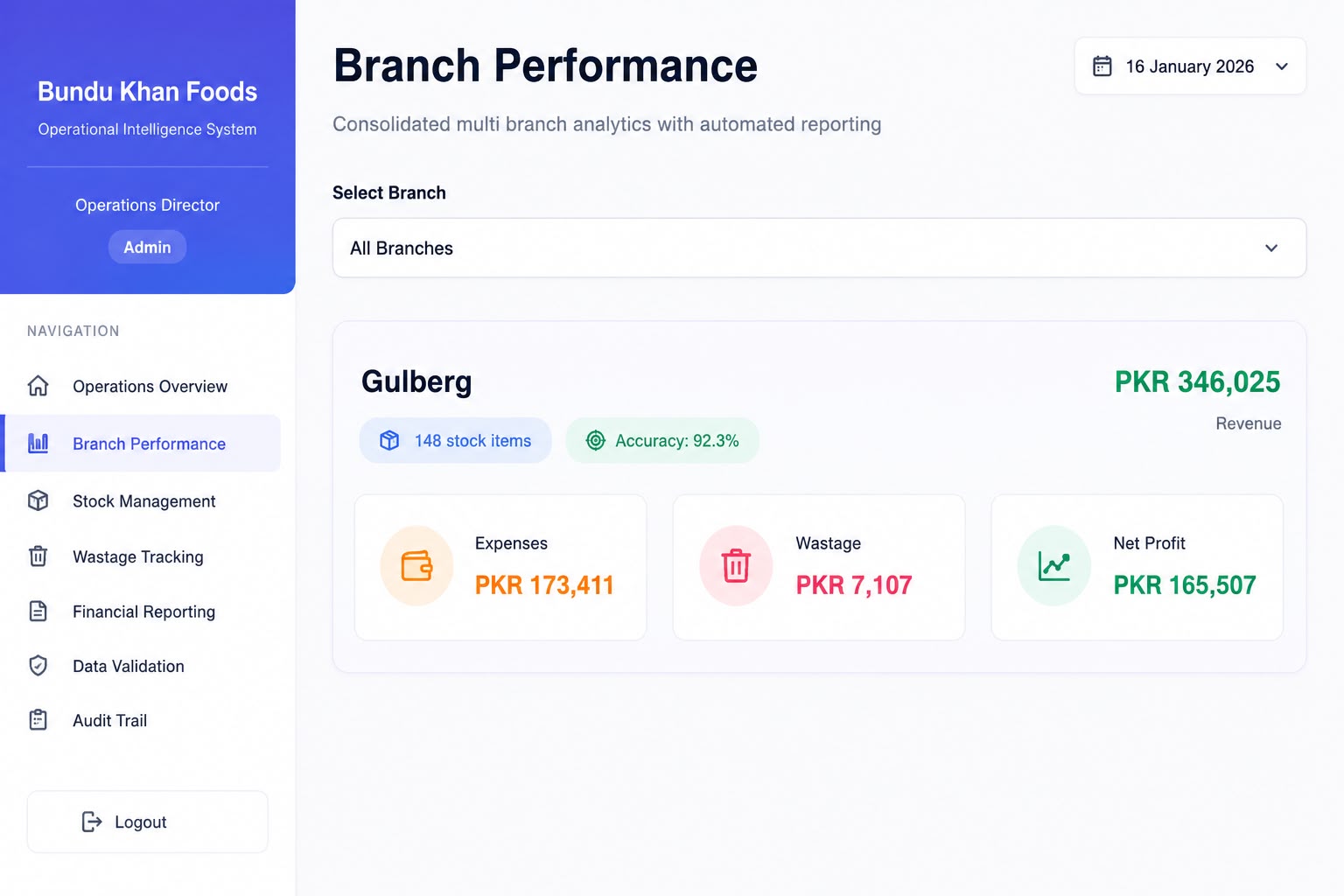
Independently designed and deployed an AI-assisted Operational Intelligence and Reporting System for Bundu Khan Foods to improve inventory tracking, data accuracy, and operational reporting across multiple branches. The system consolidates sales, expenses, wastage, wages, purchases, and stock movements into a structured reporting environment, giving management a clearer and faster view of day-to-day operations.
Key Contributions
Designed and developed the system architecture, automation logic, validation framework, and reporting structure.
Implemented automated data consolidation and validation controls to identify inconsistencies and improve data reliability.
Standardised workflows for inventory tracking, stock updates, and operational reporting.
Created protected operational summaries for use by management and relevant staff.
Created protected operational summaries for use by management and relevant staff.
Innovation
The system introduced an AI-assisted and automated approach to operational intelligence using lightweight, practical tools rather than requiring a costly enterprise ERP implementation. By combining automated consolidation, validation, and structured reporting, it transformed fragmented operational data into a more consistent and accessible source of management information.
Impact
- Improved inventory accuracy by approximately 20%
- Reduced reporting errors by approximately 40%
- Reduced operational wastage by approximately 15%
- Saved approximately 25 hours of manual work per week
- Accelerated management insights, providing fast, reliable operational data to guide daily decisions across multiple branches